
Desktop Tablet Phone
 Printable page in A4 size
 Lesson One in Twelve 15 Minute Topics.

2/ Modern Medicine
Leads to Longer Lifespans.
Healthspan v Lifespan
Healthspan and lifespan are related but are different and not growing at the same rate. In many places, healthspan is actually not increasing. The increase in lifespan over the past century, has been driven by advancements in sanitation, nutrition, and public health. Particularly by improved survival to age five, and by public health programs against infectious diseases. For example, global life expectancy has risen from about 50 years in the 1950s to over 72 years in 2020. In advanced countries, that rises to over 80 years.
Advancements in medical technology are important too, especially so in developed countries. But these interventions for individuals are expensive, sometimes very expensive, and will always be rationed, either by cost or by scarcity. If you live in a country with an advanced medical system, where in theory medical intervention might save your life, for financial reason, or because of lack of capacity medical assistance might not be available.
While people are living longer, most people are not living those extra years in optimal health, they may spend a significant portion of their later years dealing with diseases like heart disease, diabetes, Alzheimer's, and other age-related conditions. Our task is to maximise our healthy years, and we KNOW how to do that.

Both the out of shape and average levels of fitness are to be avoided. Going for a walk isn't enough. You need to put some intensity into your exercise, run, play tennis and lift weights.
Only YOU can choose to do that.
Healthspan, on the other hand, refers to the portion of life spent in good health, free from chronic diseases and disabilities. There is much you can do to improve your healthspan, particularly if you look after yourself in mid-life. Doctors commonly say that people who take their health seriously, can add 10 or 15 years of good health to their lives. If you need a hip replacement, waiting three years for treatment, doesn't improve your quality of life. Habits of a lifetime count here. If you've been active, after your hip replacement, you are likely to recover well. Sadly, many people never fully regain mobility.
The Medical System of Healthcare
While the medical system has made strides in preventing premature death, the medical focus has often been on treating acute conditions rather than optimizing health in older age. Sarcopenia is muscle loss, usually attributed to getting older, but we know how to minimise the loss.

Most of us get off track at some stage. Myself: active as a teenager, overweight at 35, fit and running marathons at 50, stopped running at 60, unfit and obese at 70, fit and healthy weight again at 83. But, my previous lapses have left me with damaged arteries.
One day that will catch up with me.
Clearly, if in your life, you look after your weight (nutrition) and build your strength, speed and flexibility (exercise), and protect you mental health (sleep, stress and social engagement) and avoid substance abuse (alcohol and smoking) you improve your healthspan opportunities.
Doctors are trained to diagnose disease or dysfunction, and to prescribe treatments. There are treatment protocols, often based on studies (Usually today, financed by the pharmaceutical industry.) which tend to recommend drugs that relieve symptoms. Doctors are not trained or paid, to spent time with patients sorting out their diet or lifestyle issues.
In some countries, what a doctor may offer patients is determined by what insurance companies are prepared to pay for; unless the patient is willing to pay. Even in countries where healthcare is "free", what a doctor can prescribe is controlled. Some treatments can only be recommended by registered medical specialists. Other options may simply be "not funded."
Our Focus on Healthspan
Healthspan is significantly influenced by lifestyle choices. Nutrition, physical activity, sleep, stress management, and avoiding harmful substances (like smoking and excessive alcohol). Your daily habits, if well chosen, can increase the number of years one spends in good health. Unfortunately because of health propaganda and commercial misinformation, most people have absorbed a good deal of unhelpful "knowledge" about making good health choices.
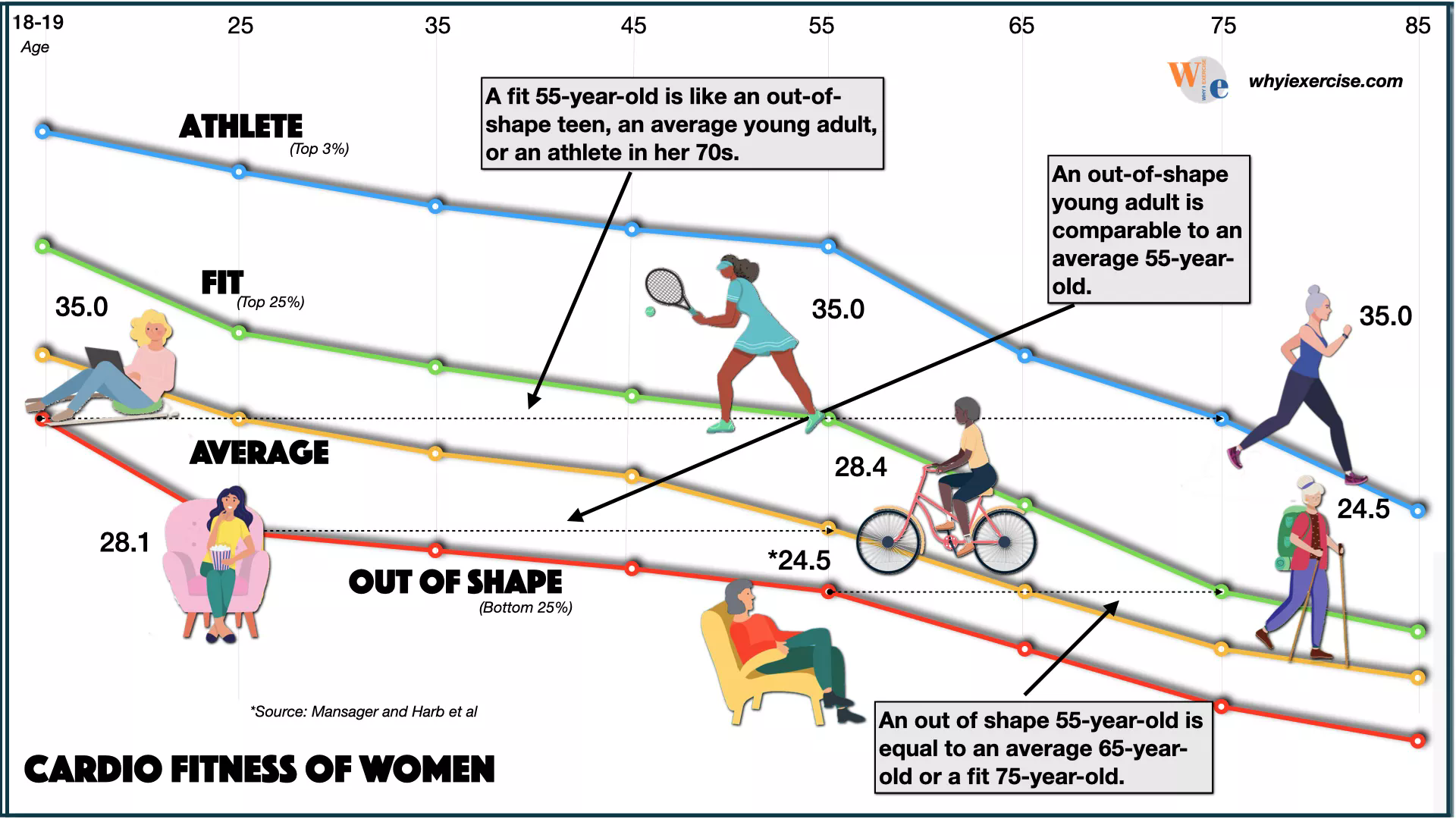
Women are not just smaller men. They are better adapted to survive the unexpected stresses of life. Women also need to build strong muscles. Get yourself into to gym, shift some heavy weights, climb a stair, ride a bike.
Your own focus should shift more toward improving healthspan rather than just lifespan. You do have effective control over your own life choices. However, not everyone has access to the resources or knowledge, to do that well. That's what we are trying to correct here. What steps do you need to take to improve your healthspan?
What do you understand from this short lesson?
To search the Open Future Health website to find similar content. Choose 2 or 3 Keywords according to your interest.
Search multiple words like: "wordone+wordtwo+wordthree".
In Google, search multiple words like: "wordone+wordtwo+wordthree"
Alternatively ask Chat GP. Suggested prompt in natural language: "Briefly: I understand that (insert your own words here), is that a sensible view?"
Keep a brief record of what you have now understood.
Write a short note for yourself, in a document, or in a journal, so that you have a record of what you have understood.
Next Topic: 3/ Nobody wants a Nanny State. (Desktop)


You can return to the Three Lessons Directory here. (Desktop)
 Return to the Open Future Health Portal. (Where you started)