
Desktop Tablet Phone
 Printable page in A4 size
 Lesson One in Twelve 15 Minute Topics.

3/ Nobody Wants to Live in a Nanny State.
Nobody likes to be told what to do. Rules, by necessity constrain what we can do. Yet good rules make life better for everyone.
There are significant dangers in setting objectives, or goals, or protocols, if the recommendation is badly considered. For instance the first attempt to make the American medical system scientific, and evidence based, was the Flexner report (1910)
Flexner's report, on Medical Education in the United States and Canada, had profound effects on the education of physicians. His basic conclusions were that medical schools with a university-based curricular design provided the best approach, that the curriculum at Johns Hopkins University School of Medicine should serve as a standard, and that, in general, all medical schools should have strong educational programs and high-quality standards.

To fatten pigs: Feed them whole grains and sweetened water.
The Search for Better Science
Many of the early medical discoveries were made in caring for livestock. Farmers for instance understood 300 years ago how to make a pig fat. "Low fat milk is the sugar concentrated part of the milk (Lactose). The fat has been removed. Barley, wheat or corn can be used as feed, but corn is best."
The pigs will eat more if the corn is sweetened by molasses or sugar cane water. Lucky farmers who can get waste from a biscuit factor or a confectionary manufacturer These especially fattening waste products are excellent for fattening pigs. Yet there was no connection made between fat pigs and fat people. What are bread, pasta, cereals, biscuits and cakes made of? Do you prefer the sweet or salty versions? Do you prefer to add soft drinks, beer of fruit juice?
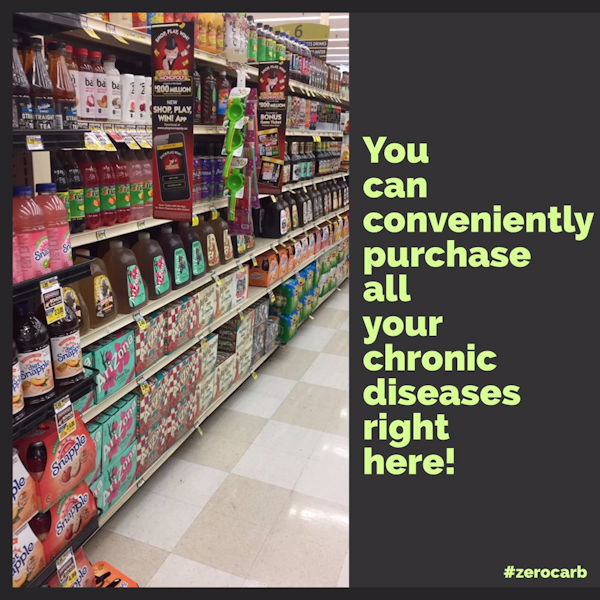
A modern version of the farmers pig food.
We buy the foods that make us fat and sick.
More than 50% of the shelves in your local supermarket are filled with biscuits, breads, cakes, chips, soft-drinks, and ice-cream. This is essentially dressed up pig food. Some cheap grain and sweetened water. We claim that we "don't know why modern people tend to be fat." We choose to be blind to the obvious truth.
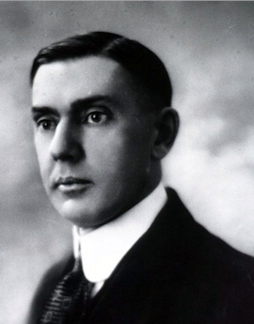
Elmer V McCollum, identified vitamins, by studying rodents.
Elmer Verner McCollum began his research with farm animals in 1912. Because cattle have a long life cycle, McCollum chose rats for his experiments. Farmers couldn't see the connection, and McCollum was dismissed. McCollum went on to discover vitamins, continuing to use rodents as his research animals. We might note that in the wild, except for seasonal fattening prior to winter, animals don't get fat. Except of course for our fat domestic animals, that share our food.
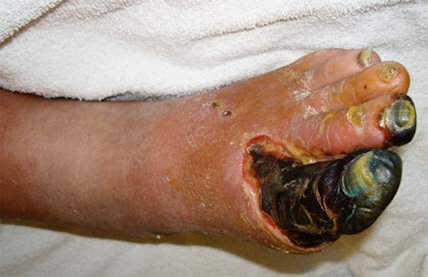
The Underlying Mechanisms:
High blood sugar damages nerves, especially in the feet and legs. This starts with: tingling or numbness in toes, loss of sensation, eventually, pain or burning sensations.
Diabetes also damages blood vessels, reducing circulation, leads to cold feet due to poor blood flow, may cause ulcers that won't heal, can cause pain at rest, and in advanced stages, amputation.
Over the next 50 years, as medical specialist were better trained, the term Doctor of Medicine became respected. Professional organisations formed, like the American Medical Association. Patient advocate organisations were established, like the American Heart Association or the American Diabetes Association. Quietly these groups created rules and professional standards intended to enhance the value and importance of the group. But later, when new evidence or new innovations became available there was often conflict with the old rules or protocols.

This is a research based finding.
Almost everyone will develop sickness, and these are the usual causes.
Yet EVERYBODY says they eat a "healthy diet".
That's clearly not the case.
When the establishment stands strong against change, science takes a back seat. There is no evidence that is convincing if your professional life, your reputation, or your income, is dependent on the that evidence being wrong. When there is a paradigm shift in thinking and practice, there is always a backlash from those who refuse to be convinced by the new evidence.
Hence, 80 years later, despite university and hospital based Medical Education, despite many professional organisation setting standards, and developing professional protocols, it was still clear that much of medical practice was NOT yet based on good science.
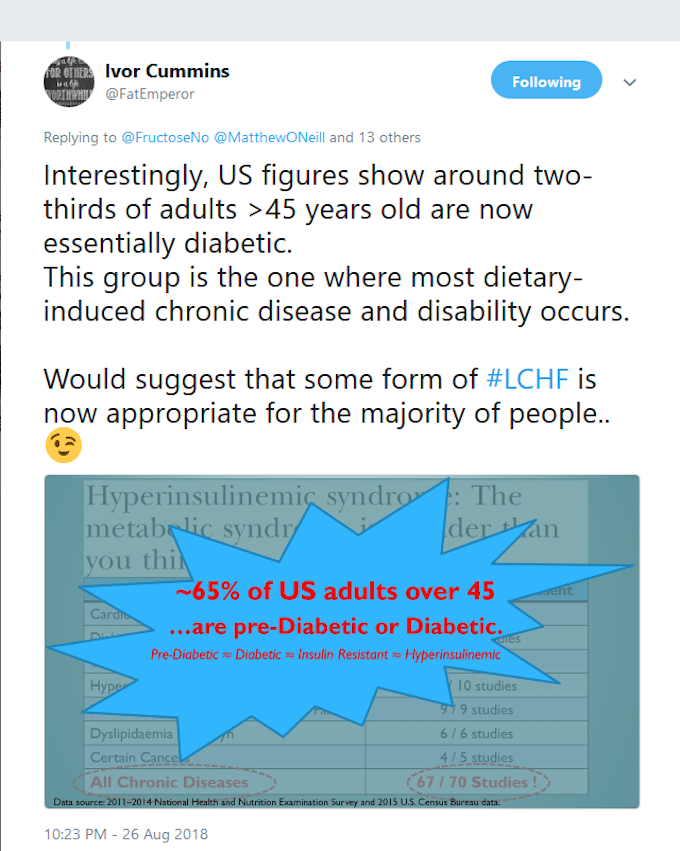
In the USA, and almost everywhere else.
Inability to see our own weaknesses, applies to all of us. There is no convincing evidence except the evidence we ourselves have found. Even medical researchers and doctors have this problem. We build walls to protect ourselves from information we'd prefer not to know. So progress is slow, new ideas often take 30+ years to be adopted, the rate of change is said to be constrained by the long lives of "eminent people" who have the loyalty of past students, and wide public recognition, that makes challenging their outdated views difficult.
You might imagine that with modern communication methods, the rate of change, the movement of better ideas from research to adoption, from proof by well established evidence to clinical use, might take less than 30 or more years. It seems not. The death rate of eminent people still apparently controls the rate of change.
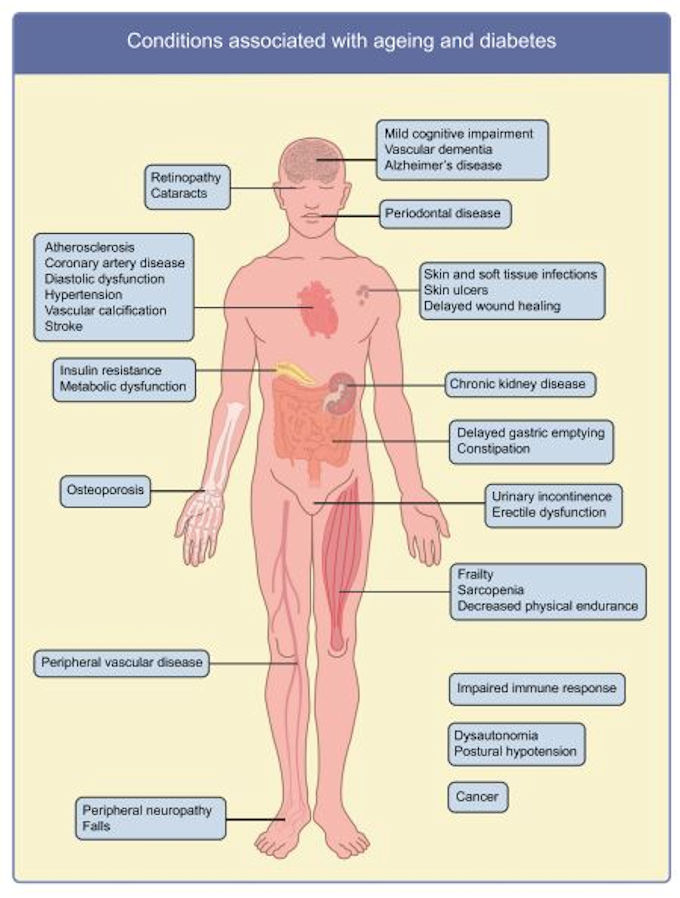
Is it old age that destroys your health, or is it your own poor understanding about how to live a healthy life? All these "problems" are avoidable, and most of them are caused by diabetes.
In our personal lives we also use what we "know," and tend to reject ideas that don't fit into the pattern of our prior knowledge. This makes it very difficult to learn anything really new. We push new ideas away without examination. We suffer the same problem as "eminent people."
We need good rules and regulation. We need professional standards and protocols that are evidence based. But all rules and protocols tend to become entrenched especially when approved by governments or powerful institutions. It can be very difficult to change poor protocols for better ones even when the evidence for change is strong.
In case you've forgotten this is the video in part one by Dr. Andrew Koutnik about the need to change our diets. For almost everyone, that's something practical that you can do NOW.
What do you understand from this short lesson?
To search the Open Future Health website to find similar content. Choose 2 or 3 Keywords according to your interest.
Search multiple words like: "wordone+wordtwo+wordthree".
In Google, search multiple words like: "wordone+wordtwo+wordthree"
Alternatively ask Chat GP. Suggested prompt in natural language: "Briefly: I understand that (insert your own words here), is that a sensible view?"
Keep a brief record of what you have now understood.
Write a short note for yourself, in a document, or in a journal, so that you have a record of what you have understood.
Next Topic: 4/ Over Medicalization of Our Health System. (Desktop)

You can return to the Three Lessons Directory here. (Desktop)
 Return to the Open Future Health Portal. (Where you started)