
Desktop Tablet Phone
 Printable page in A4 size
 Lesson One in Twelve 15 Minute Topics.

5/ The World is Stacked Against You.
The World is Stacked Against You.
Health propaganda and misinformation is everywhere in the nutrition field. It's not a conspiracy, the science was weak in the 1970's, and because of the failure of the dietary study in The Women's Health Initiative, we know the diet recommended by authorities for the last 50 years, is NOT healthy.
You have to be quite single minded in your research to find for yourself an improved diet.
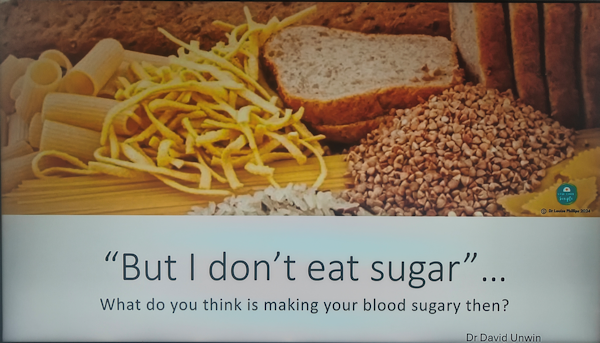
Starches break down into glucose in the blood. People are surprised.
We shouldn't be surprised when a well known and respected nutritionist, proposes that the best human diet would have less meat and more wholegrains, legumes and more vegetables. This nutritional specialist said that we should drink low fat milk, eat nuts, more legumes and fermented foods. This is exactly the type of diet the Women's Health Initiative, demonstrated in their 2006 report, as having "no health benefits."
In 2006 we had already been eating that diet for 30 years, and if you look at the recommended diet for your country it's very likely unchanged in any significant way. For instance the Standard American Diet (A model many countries emulate.) is revised every 5 years, but over 50 years, while the method of illustrating the diet has changed, we think most people will detect no change at all. (And we KNOW it's not a really healthy diet.)
In a popular magazine the Green Prescription promoted by the NZ Ministry of Health, and run locally by Sport Canterbury is recommended. They show in a photograph a very overweight woman trying to exercise to reduce her weight. I commend the woman for enthusiasm and effort, and condemn the people who are giving her that advice. The Swedish Experts Committee confirm what all of us should know; that exercise has minimal if any effect on your body weight.
Exercise has little effect on body weight, but a massive effect on your bone strength. Shift some weight, carry loads, jump.
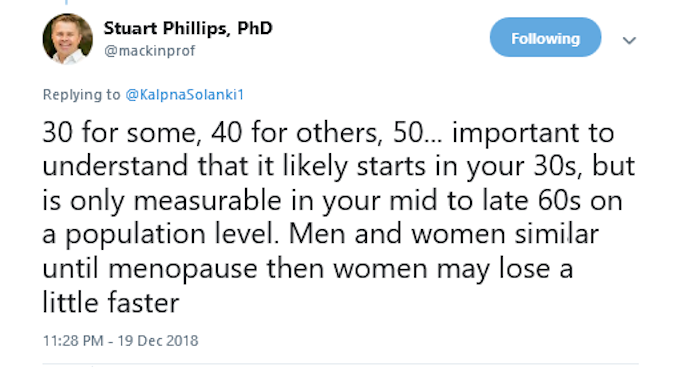
Sarcopenia or loss of bone density and strength leads to fractures and in older people sometimes to early death.
This is exactly why people have so much trouble reducing their weight. People who are supposed to be experts in the field, are saying things that have no scientific basis. We keep on doing the wrong things, thinking that we are doing good things. Following "expert" advice, sometimes gets us into trouble. "What fattens pigs will also fatten people". So who do you believe and follow? Surely, we should listen to people with expertise, but we should also know that sometimes that's not the best approach.
Repeated scientific studies have shown that meat is a valuable resource in the human diet, and that red meat, far from being vilified, has until recent times been eaten at almost every meal, by people who lived long, were strong and healthy, and who didn't get fat. Yet in my life, here in New Zealand, there is a wide belief that a vegetarian diet is the "gold standard" even though few of us are vegetarians. While "healthy" vegetarian diets are possible, in the last 15 years much research questions that idea.
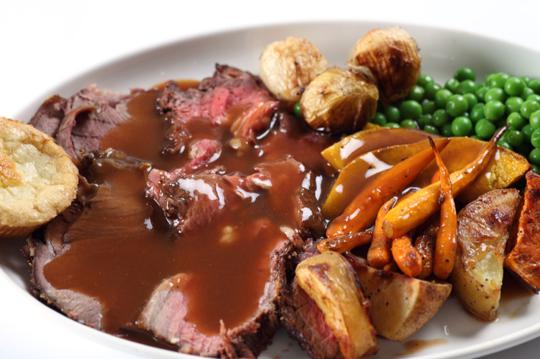
This was the sort of meal we ate at home in the 1950's. Roasted lamb or beef was common, chicken not so much. My father encouraged us to "eat the fat", which as kids we often avoided. In those days obesity was rare.
All dietary research in the last 50 years still cannot tell you what the best diet for human beings should be. We do know what it isn't. For older women, the recommended "low-fat high-carbohydrate diet" has no health benefits. Presumably that also applies to older men. For children, teenagers and middle-aged people, we cannot say, if science is our guide.
However, there are quite good guidelines for babies, and for the introduction of solid foods. It may surprise you, that baby rice or pureed apple custard, are NOT suitable baby foods. It's also well understood that almost all older people eat diets that lack quality protein. Maybe they are trying to save money. Maybe they want to lose weight. Either way, the approach is wrong.
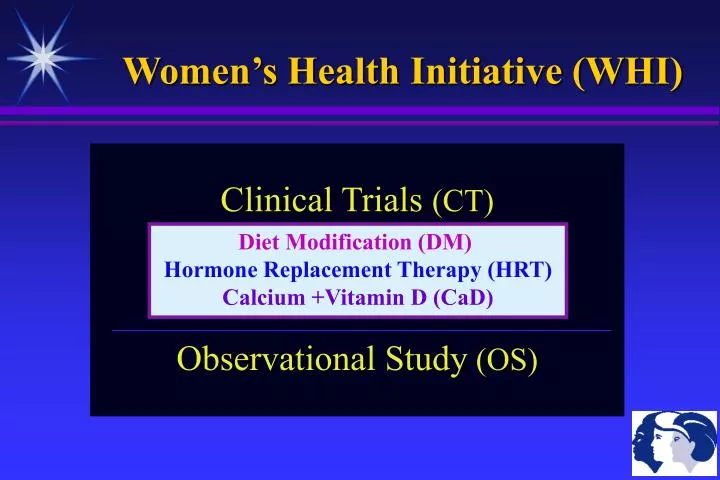
The Framingham Heart Study (which continues) was producing "black swan" results. It was decided to make one big effort, with research, to answer all the questions. Thanks to the Framingham Study, the WHI researchers felt sure that they asked good questions.
There were three clinical branches of the Woman's Health Initiative study.
The observational study was the control group.
Today, there is some evidence that both the low-carbohydrate high-fat diet and the Mediterranean diet, produce good short term results and there's no evidence yet of long term harm. However, there are many varieties of both those diets, that may not be valid representatives of the category.
Recently published science strongly supports moving towards the diet our grandparents ate. They didn't have any science to validate what they were eating, but they got a lot of things right. Like having a full breakfast, with meat and eggs and vegetables. Like having a roast red meat meal two or three times a week. Like eating less chicken rather than more. Like eating brains and livers and kidneys, or black puddings. Eating food directly from local mixed farms. The development of supermarkets changed our food supply in favour of large corporate food supply sources, sometimes international.
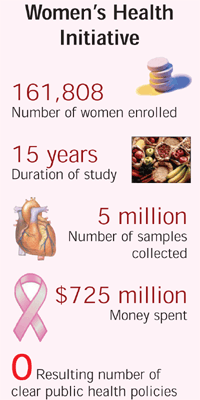
The Woman's Health Initiative study, despite high hopes and a great effort, because "Everybody knows what a health diet is", failed badly. Maybe what "Everybody knows" is wrong.
We need to understand what went wrong 70 years ago, when "nutritional science," such as it was, took a wrong turn and became unscientific. We moved away from meat, fish, eggs and fat, towards more grains, vegetables and low-fat foods. We responded to commercial and political pressure, and we made ourselves obese in the process.
The Big Fat Fix - A Movie to Save Millions of Lives
Video on YouTube -Preview of a movie
(6 minutes) (Sorry about the advertising.)
Published by:Dietary Dogma - 18 Nov 2016
We stopped going to a butcher, baker, fish monger, green grocer and grocery to get our food. Local shops were replaced by supermarkets, and local foods from local farms was replaced with foods from across the globe. Our food might be cheaper, but the quality has declined. The cheapest food available is grain based, and since low-fat versions are tasteless, sweetening (or salt) is used to boost the sales appeal. These processed grains sit on about half of all supermarket shelves. They are ultra processed foods. Alongside are soft drinks, fruit juice and beer, making the ingredients of the fattening process complete.
We need to move our diet in the opposite direction to lose weight and be more healthy. How far should we take that? That's what we all need to learn more about.
What do you understand from this short lesson?
To search the Open Future Health website to find similar content. Choose 2 or 3 Keywords according to your interest.
Search multiple words like: "wordone+wordtwo+wordthree".
In Google, search multiple words like: "wordone+wordtwo+wordthree"
Alternatively ask Chat GP. Suggested prompt in natural language: "Briefly: I understand that (insert your own words here), is that a sensible view?"
Keep a brief record of what you have now understood.
Write a short note for yourself, in a document, or in a journal, so that you have a record of what you have understood.
Next Topic: 6/ Dr. Weston Price Identified the Problem. (Desktop)

You can return to the Three Lessons Directory here. (Desktop)
 Return to the Open Future Health Portal. (Where you started)